Structural Traits and Temperaments Across Breeds
Feline breed classification is not merely cosmetic. Bone density, coat composition, skull conformation, and behavioral drives have evolved or been selectively propagated over centuries. Understanding these clinical parameters allows caregivers to tailor home care to their cat's specific phenotype.
Natural Northern Landrace Breeds
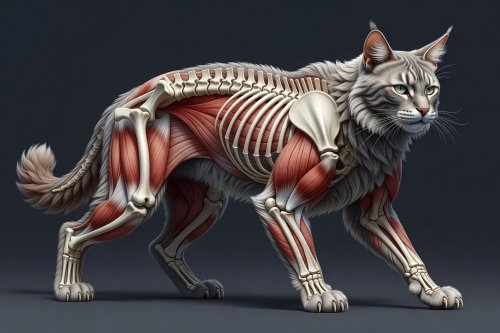
Natural landraces developed in cold boreal zones through rigorous climate adaptation before standard breed registries were formed. The Maine Coon, Siberian, and Norwegian Forest Cat represent large-frame felines characterized by slow growth cycles lasting up to four years.
Their substantial body mass places greater compressive load on the coxofemoral (hip) joints. Screening for hip dysplasia via radiograph prior to high-impact jumping enrichment is recommended for registered pedigrees. Furthermore, a high incidence of the MYBPC3 mutation mandates annual echocardiograms to rule out hypertrophic cardiomyopathy (HCM).
Oriental, Siamese, and Bengalese Profiles
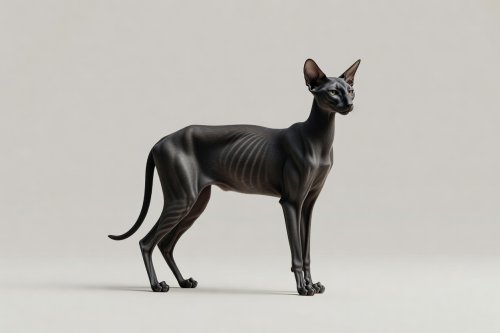
The Oriental family displays elongated tubular bodies, fine bone structure, and high surface-area-to-mass ratios that make them sensitive to cold temperatures. Behaviorally, these felines exhibit high exploratory drives, sophisticated vocal repertoires, and an intense demand for mental stimulation.
When confined to under-stimulating apartments, Oriental types frequently develop obsessive grooming or stereotypic behaviors. They benefit immensely from daily food puzzles, clicker training, and safe outdoor enclosed catteries (catios).
Brachycephalic and Chondrodysplastic Variants
Selective breeding for extreme brachycephaly (shortened muzzle) in Persians and Exotic Shorthairs creates anatomical challenges including narrowed external nares, elongated soft palates, and deformed tear ducts that cause chronic epiphora (tear staining).
Caregivers must clean facial folds daily with sterile physiological saline to prevent malassezia yeast dermatitis. Feeding must occur from wide, flat ceramic saucers to prevent whisker stress and difficulty grasping kibble or meat shreds.
Breed Health Screening Summary
A reference table outlining key structural characteristics, mandatory screening protocols, and primary temperament profiles across major breed groups.
| Breed Group | Skeletal Build | Primary Health Risk | Recommended Screening | Activity Level |
|---|---|---|---|---|
| Maine Coon & Forest Cats | Large, heavy-boned, slow-maturing | HCM (Cardiomyopathy) & Hip Dysplasia | MYBPC3 DNA test + Annual Echo | Moderate, grounded explorer |
| Siamese & Oriental | Slender, wedge-shaped, elongated | Amyloidosis & Periodontal Disease | Hepatic chemistry + Dental X-ray | High, interactive vocalizer |
| Persian & Exotic | Cobby, round head, shortened snout | PKD1 (Polycystic Kidney) & Epiphora | PKD1 genetic assay & Renal Ultrasound | Low, docile lap companion |
| British & American Shorthair | Medium to compact, muscular chest | HCM & Obesity predisposition | Cardiac auscultation & Body condition score | Moderate, self-sufficient |
| Domestic Shorthair (Moggie) | Wide genetic diversity, robust hybrid vigor | Age-related Renal Failure (CKD) | Routine senior blood chemistry & Urinalysis | Variable based on social history |